All of Us Are Dead Season
April 30, 2026
When All of Us Are Dead dropped on Netflix in January 2022, it did…

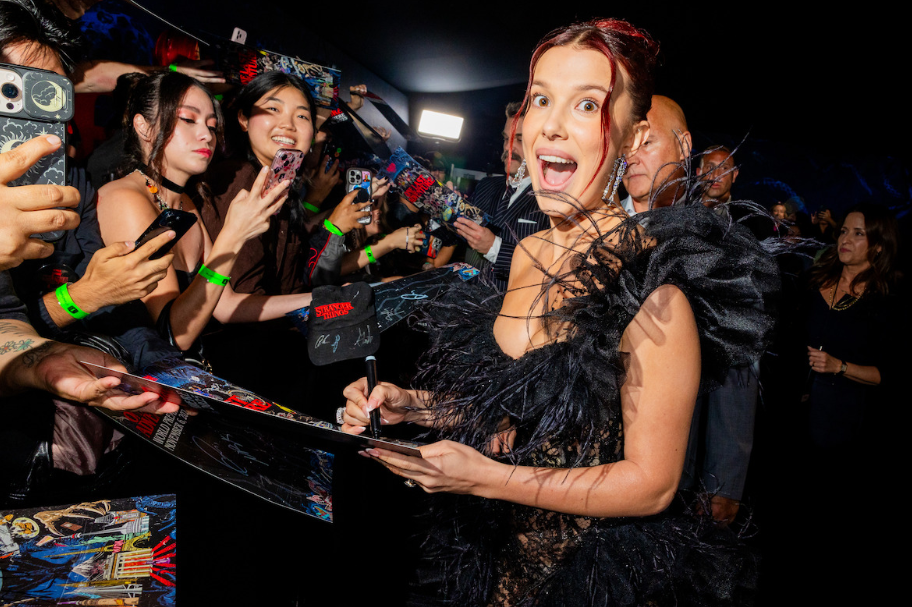
You’ve been there. You find a Reddit thread about a show you’re obsessed with, or you scroll into a TikTok comment section, or you join a Discord server for a film you just finished — and within about thirty seconds you feel like you’ve landed in a foreign country. People are arguing about whether something is canon. Someone is upset that their ship got sunk. A very passionate person is explaining why their headcanon is actually more emotionally true than what the writers did in the finale.
And you nod along. Smile. Have no idea what any of it means.
Fandom has its own language. It’s been building for decades, starting in the early internet era of message boards and LiveJournal, growing through Tumblr and Archive of Our Own, and now living across TikTok, Twitter, Reddit, and Discord. The vocabulary has expanded, shifted, and picked up new words along the way — but the core of it remains the same: a shared language that lets fans talk about the things they love with precision and passion.
This is the complete guide. Every major term, explained clearly, with real examples. Bookmark it. You’ll need it.
These three terms are the bedrock of everything else. If you understand them, about sixty percent of fan discourse immediately makes sense.
Canon is the official story. Everything that actually happens in the source material — the show, the film, the book, the game — is canon. If a character dies on screen, that’s canon. If two characters kiss in the finale, that’s canon. If a creator confirms something in an interview or adds it to official supplementary material, that generally counts as canon too, though fans sometimes debate the edges of this.
The word comes from religious and literary tradition, where a “canon” refers to an accepted body of texts. Fandom borrowed it and it stuck. When someone says “that’s not canon,” they mean it didn’t actually happen in the official story — someone made it up, or it’s wishful thinking, or it’s a theory. When someone says “that became canon,” they mean something that fans hoped for or theorised about was confirmed in the actual show.
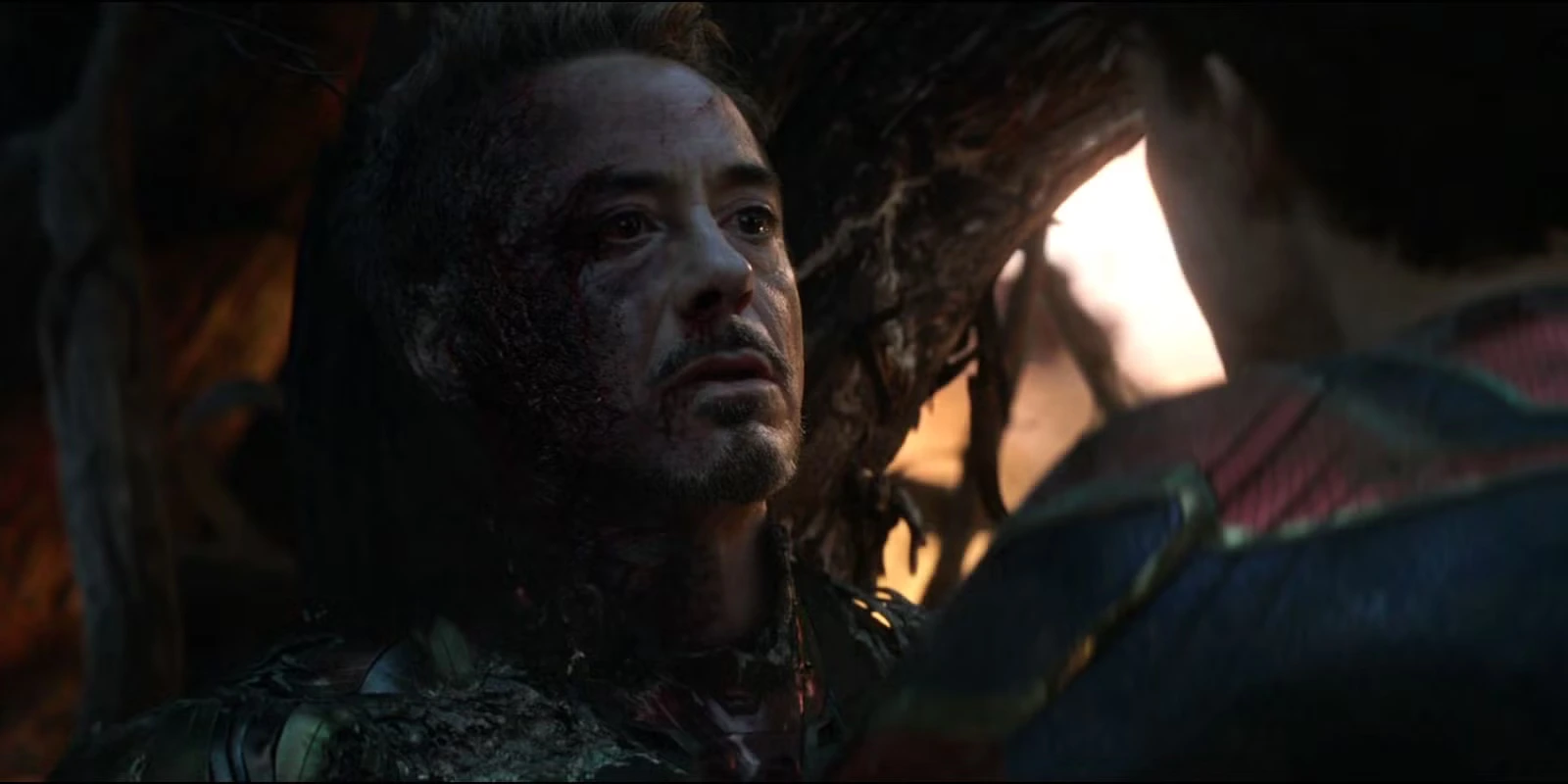
A simple example: in the MCU, Tony Stark dying in Avengers: Endgame is canon. There is no debating it. It happened on screen. It’s in the official story.
Fanon is different — and this is where it gets interesting. Fanon describes ideas, interpretations, or details that aren’t in the source material but have become so widely accepted by the fan community that people treat them almost as if they were real. It’s a portmanteau of “fan” and “canon” — unofficial canon that fans have collectively agreed on.
The difference between fanon and someone just making something up is scale. A fanon idea is one that spreads across a fandom, gets incorporated into countless pieces of fan fiction, gets discussed as if it’s established fact, and becomes part of the shared understanding of the story’s world — even though the creators never put it there.
A famous example: the widely held belief among MCU fans that the kid in the Iron Man 2 crowd who stands up to one of the Hammer drones is a young Peter Parker. Nothing in the film confirms this. But it spread as a theory, the directors later suggested it might be true, and it became fanon — something most Marvel fans just accept as probably real, even without hard confirmation.
Headcanon is personal fanon. It’s your own private interpretation of a character, a relationship, a backstory — something that isn’t in the official story but that you’ve decided is true in your version of it. Headcanons live in your head (hence the name), and they don’t need anyone else’s agreement to be valid.
Headcanons can be small and specific: maybe you’ve decided that a particular character secretly loves a certain type of music, even though the show never mentions it. Or they can be large and structural: maybe you’ve decided that a character who appears cold and distant in the story is actually deeply anxious underneath, and you read every one of their scenes through that lens.
The phrase “headcanon accepted” is what you say when someone else shares a headcanon that immediately clicks for you — that you’re now going to adopt as your own personal interpretation.
And when a headcanon gets contradicted by new official content? That’s called being jossed — a term that originated from Joss Whedon’s habit of releasing Buffy or Angel episodes that completely demolished the elaborate fan theories people had constructed. Your carefully built headcanon, destroyed by the writers. It happens to everyone.
Shipping is probably the term that casual fans hear most often without understanding, and it has an entire universe of sub-terminology around it.
Shipping means wanting two characters to be in a romantic relationship — whether that relationship is already happening in the story or whether you just want it to happen. The word comes from “relationship,” shortened to “‘ship.” You “ship” two characters. You’re a “shipper.” The pairing itself is your “ship.”
The term has been around since the 1990s, largely originating in The X-Files fandom, where fans debated endlessly about whether Mulder and Scully should get together. It spread from there into every corner of online fandom and is now completely mainstream.
Ships are usually referred to by portmanteau names — smooshing the two characters’ names together. So fans who wanted Harry and Hermione together in Harry Potter called it “Harmony.” The passionate following for Tom and Greg in Succession called that pairing “Tormund.” In Stranger Things, Mike Wheeler and Will Byers relationship was “Byler“. The naming conventions vary and sometimes get creative, but the pattern is usually: combine the names somehow, make it pronounceable.
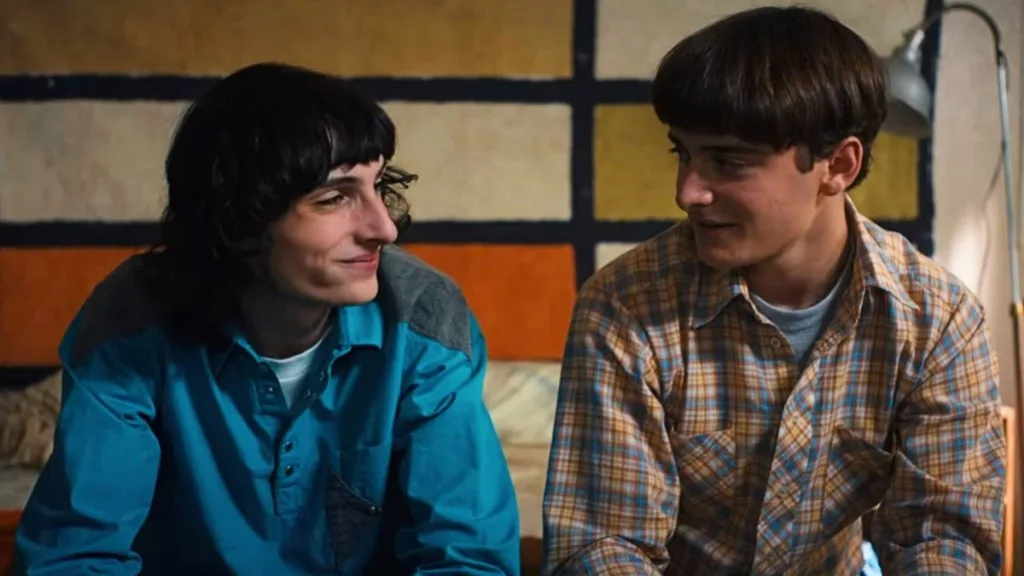
Canon ship means the relationship actually happens in the official story. They get together on screen. It’s real within the narrative. Non-canon ship means you want it to happen but it doesn’t, or hasn’t yet.
Endgame refers to which ship ends up together at the conclusion of the story. Fandom arguments about endgame can get genuinely heated, because for a lot of fans, who ends up with whom feels almost like a personal stake — they’ve invested deeply in these characters and they care what happens to them.
OTP stands for “One True Pairing.” It’s your ship above all ships — the pairing you are most emotionally invested in, the one you would most want to become endgame. Everyone has one in every fandom they’re in. Sometimes multiple. The term “OTP” gets thrown around loosely now, but originally it meant the ship that mattered more than any other to you specifically.
BROTP is a companion term for a platonic pairing — two characters whose friendship you are completely devoted to, who you want to be best friends forever but not romantically involved. The “bro” prefix is a bit dated but the term stuck.
OT3 is when you refuse to choose between two ships and instead advocate for all three characters to be in a relationship together. Rare, chaotic, committed.
Ship war is exactly what it sounds like — a conflict between fans of different ships within the same fandom. Ship wars can be gentle disagreements or can turn into the kind of intense online arguments that last for years. The most passionate ship wars in fandom history (Dramione versus Romione in Harry Potter, anyone?) have generated hundreds of thousands of words of argument. They are occasionally unhinged and often deeply entertaining from the outside.
A crack ship is a pairing that’s considered ridiculous or impossible — usually between characters who have never met, or whose relationship makes no narrative sense whatsoever. Crack ships are usually pursued with full awareness of their absurdity, and often with a sense of humour about it. The opposite of a crack ship is one grounded in actual canonical interaction and emotional connection.
Slow burn is a shipping term that describes a relationship that takes a very long time to develop — lots of longing glances, almost-moments, unresolved tension, before anything actually happens. Slow burn is a beloved trope precisely because the buildup makes the eventual payoff feel earned. “I’m in this for the slow burn” is a declaration of patience and commitment.
Enemies to lovers is one of the most popular romance tropes in fandom — two characters who start out antagonistic toward each other and gradually develop romantic feelings. The appeal is obvious: the transformation is more dramatic, the emotional journey is longer, and the tension in the early stages is deeply satisfying.
When fans love something enough, they don’t just consume it — they create within it. The vocabulary around fan creation has its own ecosystem.
Fanfiction (or fanfic) is fiction written by fans using the characters and world of an existing property. Fans write fanfic for almost every conceivable reason: to explore storylines the show never pursued, to give side characters more depth, to write the romance they wanted to see, to explore “what if” scenarios, or simply because they love these characters and want to spend more time with them. Fanfic has been around for as long as fandom has existed in any organised form — there are published Star Trek zines from the 1970s that are essentially fanfiction.
The most popular platform for reading and publishing fanfic right now is AO3 — Archive of Our Own, a nonprofit, community-run archive that hosts millions of works across thousands of fandoms. It’s won awards, attracted serious academic study, and is genuinely one of the more remarkable cultural phenomena of the internet era. Wattpad is another major platform, particularly popular with younger readers and writers.
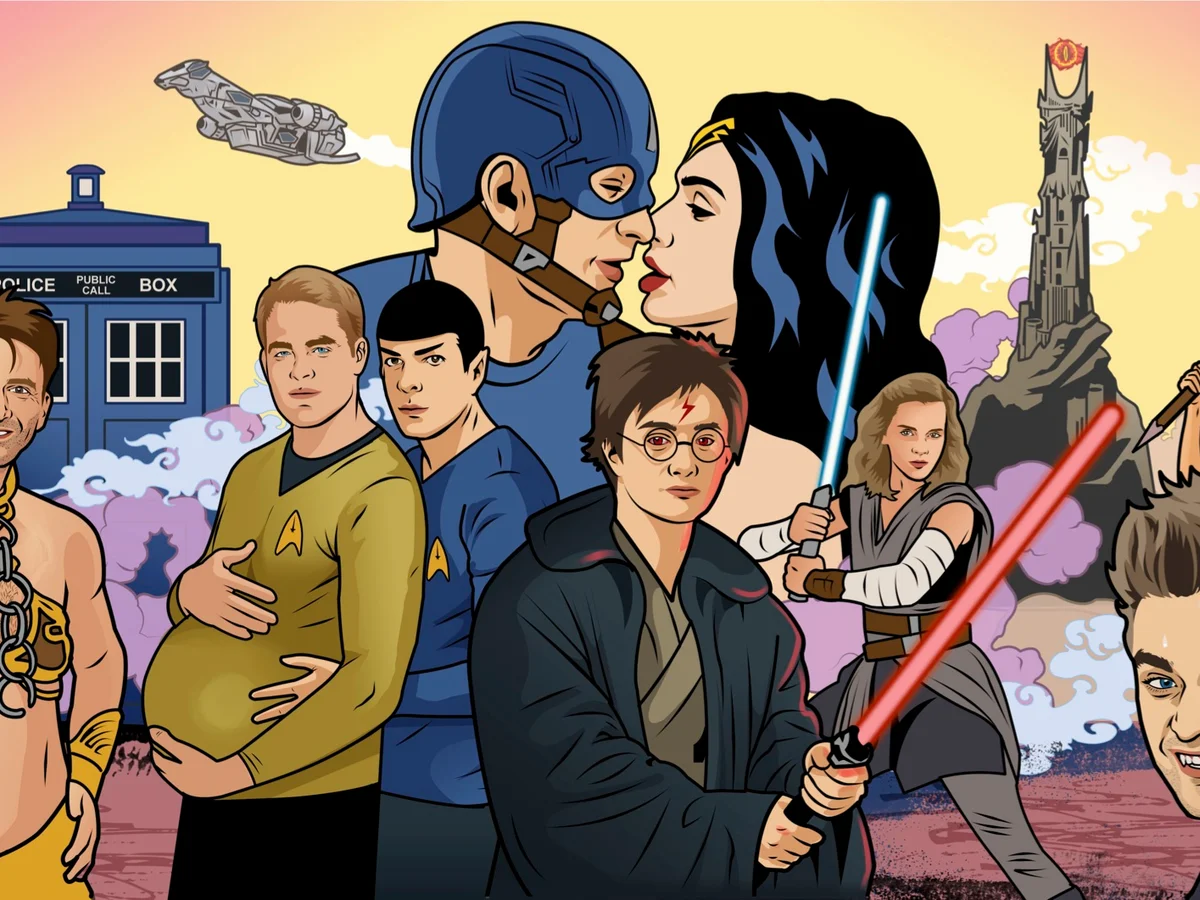
AU stands for Alternate Universe. An AU fanfic takes the characters from a story and puts them in an entirely different context — same people, different world. Common AU types include coffee shop AUs (your favourite characters meet as baristas or customers), high school AUs (everyone is teenagers regardless of their age in canon), and soulmate AUs (where various mechanics of the universe guarantee romantic connection). The appeal is that you get to explore what makes these characters who they are when you strip away the original setting.
Canon-divergent is a specific type of AU where the story starts from a point in the official narrative and then takes a different path — usually from a moment where fans felt the writers made the wrong choice. “What if this character hadn’t died,” or “what if they’d made this decision differently.” Canon-divergent fics are often the direct product of fandom grief.
Fluff is fanfic that is warm, soft, comforting, and light. No drama, no pain, just good vibes and happy moments. People read fluff when they need something gentle. It is genuinely beloved.
Angst is the opposite. Emotionally painful, heavy, character-suffering content. Despite this, angst is one of the most popular fanfic genres, because readers enjoy processing emotions through fiction, and a well-written angsty story can hit harder than almost anything else.
Hurt/comfort (usually written as H/C) combines both — one character is hurt (physically or emotionally) and another character provides comfort. It’s one of the most enduring tropes in fanfic precisely because it’s a direct channel for examining how characters care for each other under pressure.
Drabble is a very short piece of fanfic — originally specifically 100 words, though the term now applies loosely to any brief piece.
Gen fic is fanfic with no romantic content — focused purely on character development, plot, friendship, or other elements without a shipping focus.
Mary Sue (or Gary Stu for male versions) is a term for an original character inserted into a story who is implausibly perfect — overpowered, universally beloved by all other characters, effortlessly skilled at everything, often a thinly veiled stand-in for the author themselves. The term is sometimes used critically, though the concept is more complicated than it first appears — many beloved canonical characters have Mary Sue qualities too.
Fan art is artwork created by fans depicting characters, ships, or scenes from a fandom. It ranges from quick sketches to extraordinarily detailed professional-quality illustrations. Fan artists are an essential part of every fandom, and their work circulates widely on Tumblr, Twitter, Instagram, and DeviantArt.
Cosplay is short for “costume play” — dressing up as a character, usually for conventions, fan meetups, or events. Cosplay has grown into its own art form, with some cosplayers creating extraordinarily elaborate costumes that rival professional production design. Crossplay is cosplaying a character of a different gender than your own.
Doujinshi is a Japanese term for self-published fan works — usually comics or manga created by fans of an existing property. It’s particularly prevalent in anime and manga fandoms.
Beyond shipping and fan creation, there’s a whole vocabulary around how fans discuss the structure and world-building of the stories themselves.
Lore refers to the accumulated background knowledge and world-building details of a fictional universe. A story’s lore includes its history, its rules, its mythology, the details about how its world works. Heavy lore is a feature of franchises like Star Wars, Tolkien’s Middle-earth, the MCU, and Game of Thrones — worlds rich enough that fans spend significant time studying and discussing the details. When someone says a show “has great lore,” they mean its world feels deep, detailed, and coherent.
Canon lore is official world-building from the source material. Expanded universe refers to official additional material — comics, novels, tie-in games, spin-offs — that adds to the lore beyond the main property. Fans sometimes debate how much expanded universe content should count as “real” canon.
Retcon is short for “retroactive continuity” — when a creator changes or recontextualises something established in earlier official material to serve a new story purpose. Retcons are controversial when they contradict what fans accepted as true. A famous example is when a character is revealed to have had a different background than previously established, requiring you to re-read their earlier appearances through a new lens. Some retcons are brilliant. Some infuriate fandoms for years.
Plot armour is a bit of loving mockery directed at main characters who survive situations they absolutely shouldn’t, simply because the story needs them alive. When a hero walks out of an explosion unscathed for the fifth time, fans call that plot armour. It’s not always a criticism — sometimes fans use it affectionately — but it acknowledges the contract between story and audience.
Deus ex machina (Latin for “god from the machine”) is when a seemingly unsolvable plot problem is resolved through a convenient and largely unearned solution that appears from nowhere. It’s considered poor storytelling because it breaks the internal logic of the narrative. When fans complain that a show’s finale resolved everything too neatly and without consequences, they’re often describing a deus ex machina.
The fourth wall is the invisible boundary between the fictional world and the audience. When a character “breaks the fourth wall,” they acknowledge the audience directly — think Deadpool. When fandom discussions involve creators responding to fan pressure or incorporating fan ideas into the show, that’s sometimes described as the show being “fan service” — which leads us neatly to the next section.
Fan service refers to content in an official work that exists primarily to please fans rather than to serve the story. This can be something as simple as two beloved characters sharing a scene they don’t strictly need to share, or as significant as bringing back a dead character because the fanbase demanded it. Fan service isn’t always a bad thing — giving fans what they want can create genuinely joyful moments — but when it comes at the expense of story logic or character consistency, fans will call it out.
Queerbaiting is a specific and more serious accusation — the practice of a show suggesting or hinting at a romantic relationship between two same-sex characters in order to attract an LGBTQ+ audience, without ever actually confirming or depicting that relationship. The “bait” is the suggestion; the promise is never delivered. It’s a term that carries genuine criticism because it implies using LGBTQ+ fans‘ desire for representation as a marketing tool without providing actual representation.
Fridging (or “Women in Refrigerators”) is when a female character is killed, injured, or otherwise harmed not for her own narrative sake but to motivate a male character’s story arc. The term comes from a 1994 comic in which a female character was literally found dead in a refrigerator for this purpose. The trope has been widely criticised as a lazy storytelling shortcut that treats female characters as props rather than people.
Character assassination is when a show or film takes an established character and writes them in a way that fundamentally contradicts who they’ve been established to be — usually sacrificing their established personality or values for plot convenience. It’s different from a character making mistakes or going through changes; it’s when the character stops feeling like themselves in a way that seems unearned or careless.
Flanderisation is when a character’s traits become exaggerated over time until the character is defined by a single quirk rather than their full complexity. The term comes from The Simpsons’ Ned Flanders, who evolved from a well-rounded character into a one-note religious joke. Long-running shows are particularly susceptible to this.
The Bechdel Test is a measure of female representation in fiction that asks three questions: Does the work have at least two female characters? Do they talk to each other? Do they talk about something other than a man? It’s a low bar deliberately — the point is to illustrate how many works fail even this minimal standard.
TPTB stands for “The Powers That Be” — the creators, showrunners, executives, and others who control a property. When fans are frustrated with story decisions, they often direct criticism at TPTB. It’s a useful catch-all for “the people in charge of this thing we love.”
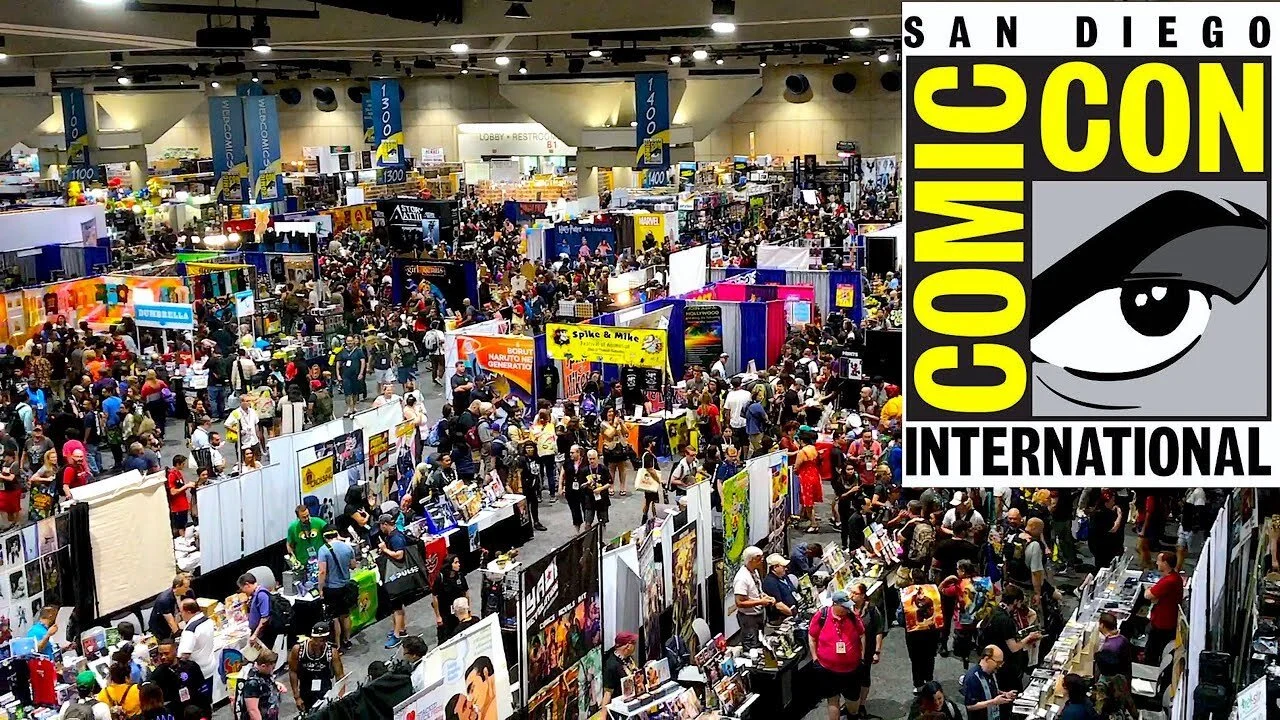
Con is short for convention — a gathering of fans around a shared interest. Conventions range from enormous events like San Diego Comic-Con (SDCC), which draws over 130,000 people and dominates entertainment news every July, to small local cons focused on specific fandoms. They typically involve celebrity appearances, panels, merchandise, cosplay contests, and the irreplaceable experience of being physically surrounded by people who love the same things you do.
Panel at a convention refers to a scheduled discussion or presentation — a Q&A with cast members, a debate between fans, a discussion of a specific aspect of a fandom.
SDCC is San Diego Comic-Con — the biggest entertainment convention in the world, held annually in San Diego, California. Major studios use it to make announcements and show footage, and the news that comes out of it dominates entertainment discussions every summer.
Squee is the sound of fangirl or fanboy excitement — a noise of pure, uncomplicated delight at something in your fandom. As a verb, to squee means to react with that kind of unguarded enthusiasm. It’s one of fandom’s more endearing terms.
Stan has a complicated history. Originally from the Eminem song of the same name, “Stan” described an obsessive, potentially unhealthy level of fan devotion. It’s evolved to be used more neutrally — “I stan this character” now often just means “I love and support this character enthusiastically.” Context matters; it can still carry connotations of excess depending on how it’s used.
Fandom discourse is the catch-all term for discussions, debates, and arguments within a fan community. Some discourse is thoughtful and illuminating — genuine critical engagement with the themes and choices of a work. Some is extremely chaotic and takes place mostly on social media at high volume. “Fandom discourse” said with a slight sigh usually means the latter.
Hot take is a strong opinion presented bluntly, often one that the speaker knows will be controversial. “Hot take: the Stranger Things finale was actually good” is an example in a fandom context. Hot takes are invitation to debate.
Casual fan versus hardcore fan is a distinction that comes up often. Casual fans enjoy something without necessarily engaging with the surrounding community or consuming additional content beyond the main work. Hardcore fans (sometimes called “stans” or just “fandom”) go deeper — they discuss, create, theorise, and invest significantly in the property. Neither is better than the other, but fandoms are predominantly built by the hardcore.
Fandom language is alive and still evolving. Here are some more recent additions that you’ll encounter regularly in 2026.
Liveposting or liveblogging is the practice of posting your real-time reactions to a show or film as you watch it — usually on Twitter or Tumblr. It creates a shared experience for people watching simultaneously and is one of the more immediate ways fan communities bond.
Spoiler culture around modern fandom has become a significant topic. Fans generally have unwritten agreements about how long you wait before discussing spoilers openly, though these norms vary by platform and community. “No spoilers” or “spoiler warning” in a fan space means significant plot information is about to be shared.
Unpopular opinion (often abbreviated “unpopular opinion” or “unpo”) is when a fan shares a view they know goes against fandom consensus. It’s a framing device that acknowledges the potentially controversial nature of what they’re about to say and invites discussion rather than conflict.
Sleep-deprived fandom is a loving term for the state of staying up far too late discussing, reading, or creating content for a fandom you love. It’s used with affection and solidarity. We’ve all been there.
Comfort character is a character you turn to emotionally — one whose existence in a story brings you specific comfort, whose scenes you rewatch when you need to feel better, who you have a particular personal connection with beyond simply liking them. Comfort characters are often discussed with a kind of tender seriousness, because they represent something real about how stories can support people.
Character coded is a way of describing a character who strongly suggests a particular identity or trait without it being explicitly confirmed in canon. “He’s so obviously neurodivergent-coded” means the character displays traits strongly associated with neurodivergence, even if the show never uses that word.
Dead dove is a content warning used in fanfic spaces, borrowed from a scene in Arrested Development. It means: the content of this work is exactly as dark as described, and you cannot assume it will be softened. If you see “dead dove” in the tags of a fanfic, it means what it says. Don’t be surprised.
For anyone who wants the short version — or who needs to quickly look up a term mid-conversation:
Canon — officially happened in the source material. Fanon — widely accepted by fandom but not official. Headcanon — your personal interpretation. Jossed — your theory or headcanon was contradicted by new canon.
Ship/Shipping — wanting two characters together romantically. OTP — your ultimate ship. OT3 — your ultimate trio. Endgame — who ends up together at the story’s end. Ship war — arguments between fans of different ships. Crack ship — an absurd or impossible pairing. Slow burn — a romance that develops very gradually.
Fanfic/Fanfiction — fan-written stories. AO3 — Archive of Our Own, the main fanfic platform. AU — Alternate Universe. Fluff — warm, happy content. Angst — emotionally painful content. H/C — hurt/comfort. Mary Sue — an overpowered, implausibly perfect character.
Lore — the world-building and background details of a story. Retcon — retroactively changing established canon. Plot armour — a character surviving things they shouldn’t. Deus ex machina — a convenient, unearned plot resolution.
Fan service — content designed to please fans. Queerbaiting — hinting at LGBTQ+ representation without delivering it. Fridging — harming a character to motivate another’s story. Flanderisation — a character becoming a one-note version of themselves.
Con — convention. SDCC — San Diego Comic-Con. Squee — expression of pure fan excitement. Stan — intense fan support. Discourse — fan community discussion and debate. Comfort character — a character that brings you personal emotional comfort.
Fandom has its own language because it needs one. These terms exist because fans needed precise ways to talk about very specific things — the difference between what a creator made and what a fan wishes they’d made, the distinction between loving a relationship and the show actually depicting one, the shorthand for an entire mode of storytelling.
Learning this vocabulary doesn’t just make you better at following online discussions. It gives you better tools for thinking about stories — what they do, what they choose not to do, and what communities build in the spaces between. You’re part of a fandom whether you use the words or not. Knowing the language just means you can participate in the conversation.
Are there terms we missed? Drop them in the comments and we’ll add them to the guide. This one gets updated.

I’m the writer behind Fandom Watch, where I share news, guides, and fan theories about shows, anime, and the wider world of pop culture. My goal is to make fandom fun and accessible for everyone, whether you’re a casual viewer or a die-hard fan.






April 30, 2026
August 27, 2025
October 3, 2025
September 17, 2025